

Marker lights quietly play a crucial role every time a truck rolls out before sunrise or into messy weather. They also help other drivers see the vehicle’s true size and boundaries, which enhances road safety.
Under 49 CFR 393.11, commercial motor vehicles manufactured on or after December 25, 1968, must meet the applicable FMVSS No. 108 requirements from the time of manufacture. This covers lamps and associated equipment, including side marker lamps and identification lamps. Here are nine ways LED marker lights meet DOT visibility standards.
1. They Make the Vehicle’s Length Easier to Read
Side marker lights help other drivers understand how far the vehicle extends along the road. This matters most when a long truck or trailer turns across traffic, pulls into a dock lane, or sits along a dark shoulder. A small lamp can prevent a big misread, especially when the vehicle blends into the background.
Why Side Visibility Matters at Night
A long vehicle can look shorter in poor light than it really is. Side marker lights reduce that illusion by giving the eye reference points along the body. Once those reference points disappear, another driver may crowd the vehicle during a pass or turn. That is why a single failed marker lamp can pose more risk than its size suggests.
2. They Keep Front and Rear Color Cues Clear
Color tells drivers which part of the vehicle they are seeing. In common marker and clearance applications, amber lamps identify forward areas, while red lamps identify rear areas. That color logic helps drivers quickly interpret direction, especially when vehicles move through dim yards or through roadside work zones. A wrong-color lamp may still shine brightly, but it can send the wrong message.
LED replacements make color matching straightforward when crews order by location rather than by size alone.
3. They Help Show a Vehicle’s Width
Clearance lamps help mark the overall width of certain trucks and trailers. Federal rules address required lamps by vehicle type, and FMVSS No. 108 includes detailed sections for lamp quantity, color, mounting location, mounting height, and visibility. (eCFR) The goal is a readable vehicle outline.
LED clearance lights work well in a vehicle’s outer areas because they draw attention to the edges. This helps in tight lanes, especially when a wide body moves near traffic or equipment. It also helps during backing, where the driver and anyone outside the truck need a clear sense of the body’s corners.
4. They Support Identification Lamp Patterns
Identification lamps help mark certain wider vehicles with a distinct lamp pattern. Many larger vehicles use a three-lamp group near the upper center area, depending on the vehicle type and the applicable requirement. That pattern helps other drivers recognize a wider vehicle sooner. It is a simple cue, but it works because people can read it quickly.
Installing matched LED identification lamps helps fleets maintain a uniform lighting pattern. Over time, inconsistency makes inspections less clear because lamps no longer appear as a set.
5. They Reduce Electrical Load Without Fixing Bad Wiring
LED marker lights typically draw less current than incandescent lamps. That lower draw can help vehicles with several lighting circuits, especially trailers or work trucks with long harness runs. However, a lower current does not erase electrical problems. A weak ground can still make an LED flicker, and corrosion at a connector can still interrupt power.
Technicians should check the ground path when a lamp acts strangely after replacement.
6. They Improve Inspection Speed When Fleets Standardize
A walkaround works better when the lighting pattern looks consistent from truck to truck. Drivers can spot a failed lamp faster when the fleet uses similar marker styles. Technicians can also compare brightness and placement without having to wonder which variation belongs on which body. Standardization saves time because the correct pattern becomes familiar.
Standardization means using common lamp sizes and colors, even if different body styles need unique housings. Focus on adapting standard practices fleet-wide.
7. They Resist Vibration Better Than Filament Bulbs
Commercial vehicles vibrate constantly. Rough roads, loading docks, and winter equipment can shake lighting components all day. Incandescent bulbs use filaments, and vibration can shorten filament life. LEDs avoid the filament failure point, which helps them last longer in harsh service conditions.
Even so, the lamp housing still needs proper support. A loose grommet can allow the lamp to move in the opening until the wiring is damaged. So while LEDs offer a durability advantage, the installation still decides how well that advantage holds up.

8. They Help Keep Visibility Strong in Bad Weather
Rain, snow, and road spray can quickly reduce lamp visibility. LED marker lights often provide a sharp, clear signal that cuts through low-light conditions better than a faded or weakened lamp. However, grime can still cover the lens and block output.
Maintenance should emphasize routine cleaning rather than just replacement. Remind drivers to clean marker lights before night shifts or after storms for maximum visibility.
9. They Make Replacement Planning More Practical
LED marker lights can help fleets build a better replacement strategy. Since many LEDs offer longer service life, fleets can reduce the need for frequent bulb changes. That gives maintenance teams more time to focus on connector condition, mounting integrity, and layout accuracy. Over time, the lighting program becomes less reactive.
The best approach starts with identifying the lamp types used across the fleet. From there, shops can stock the most common amber and red units, along with compatible grommets and pigtails. This prevents a minor lighting repair from delaying the ordering process. It also keeps technicians from forcing a poor fit because the right part was not available.
Use this checklist during replacement work or pre-trip reviews:
- Match each lamp color to its required vehicle position.
- Confirm the mounting style before ordering a replacement.
- Check the grommet when you replace a failed lamp.
- Inspect the connector if the new lamp flickers.
- Clean the lens before night routes or during stormy weather.
- Replace any lamp that shows moisture inside the housing.
- Keep common replacement lamps available for faster repairs.
Keep DOT Visibility Simple
When fleets apply the nine ways LED marker lights meet DOT visibility standards to daily maintenance, they focus on the details that keep commercial vehicles readable on the road. Keep in mind that LED marker lights achieve best DOT visibility when teams treat them as safety equipment rather than decorative dots on a truck body.
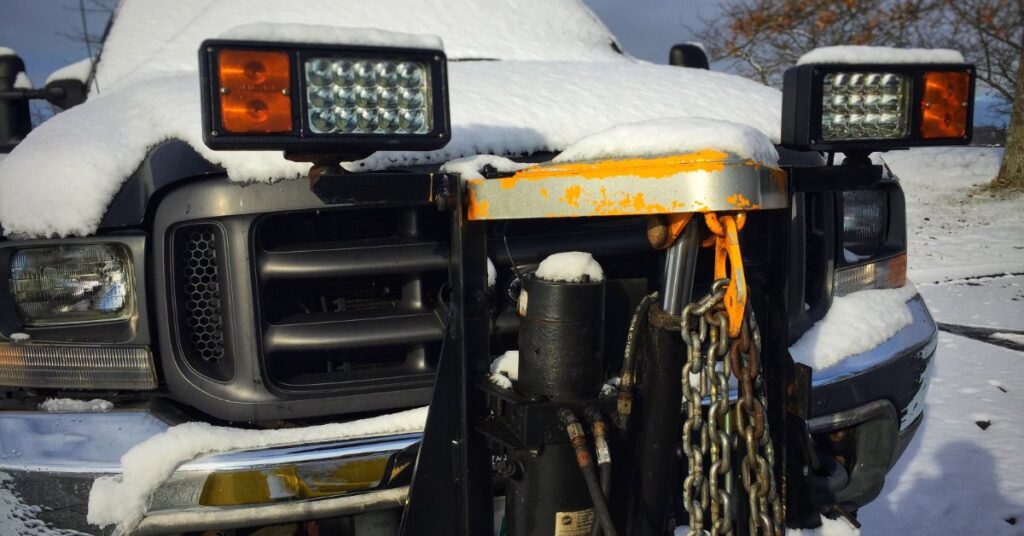
Keep your truck visible when snow and low light make every route harder. Mill Supply offers dependable plow truck accessories that enhance visibility in tough winter conditions. From replacement lighting components to the parts that keep your setup secure and road-ready, the right upgrades can make your truck easier to see and easier to maintain. Stock up at Mill Supply today!
Leave a Reply